The eighth of nine children raised in tenement Glasgow in the twenties and thirties, Clifford Leonard Clark (Cliff) Hanley emerged, fully-fledged as an author with his acclaimed first published book "Dancing in the Streets", which recreates the life of his native city and which is now accepted as a classic.
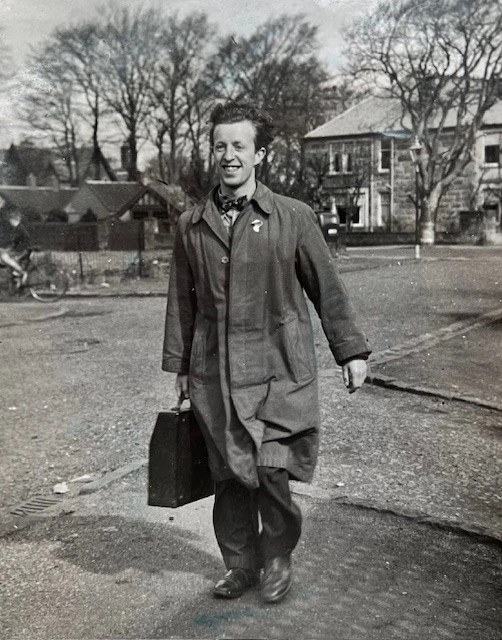
His journalistic career began with a life of crime - reporting from the city courts for a local news agency. By the time he had graduated to the Daily Record, it was clear that he had an astonishingly versatile range, writing fast news pieces, theatre reviews, humorous articles, and full-scale features on almost any subject an editor could demand. Even advertisers, mounting special pages, would ask for the editorial to be written by “your bright wee man Hanley”. Easily able to churn out 4,000 words a day on almost any given topic -- his editor had him use the byline Andrew Bonar so readers wouldn't think Cliff was the paper's only reporter.
In particular, he loved the then hectic world of Glasgow show-business, reporting on the raft of theatres which still survived in the city into the 1960s, and which attracted big names from the theatre and Hollywood, many of whom would remain his friends.
.jpg "image title")
He was always more than a commentator and reviewer, his membership of Equity testifying to his skills on the speaking circuit, and to his talent as a lyricist. He was astonished when, having put words to an old pipe tune for use in a variety show, he found Scotland The Brave emerging as the de facto national anthem, but he also penned marvelously witty Scottish themed songs.

With Burl Ives during the latter's Glasgow visit in 1952. The caption on the back reads
"Battle of the beards - 9 stone Hanley meets 21 stone Ives.
In 1958 that first book, Dancing in the Streets, was published. An evocative, autobiography of a Glasgow childhood, it proved successful enough with readers and critics to launch him on a full-time book-writing career. It is still considered one of the most engaging books about Glasgow, the grittier experiences always leavened and laced with his irrepressible humour. It is still in print.
Cliff went on to produce a score of novels, including thrillers under the pen name Henry Calvin, scripts for the theatre, television and documentary films, notably the Oscar-winning Seawards the Great Ships, and poetry as Ebenezer McIlwham, the Bard of Whifflet West.
His light and humorous touch and sharp observations on Scottish life saw him much in demand as a commentator on radio and television, not only in Scotland but on UK-wide programmes. Very much a "professional Glaswegian", he was often called upon to comment on issues affecting the city. He was a presenter on Radio Scotland's "Today in Scotland" in the early seventies, and hosted his own television series "Cliffhanger" and a crossword game show.
He served on the Scottish Arts Council, and the Inland Waterways Advisory Council, was Scottish chairman of the Writers Guild, president of the Scottish Center of International PEN and of the Glasgow Philological and Literary Society. He was proud of his lifelong honorary membership of the Strathclyde University Debating Society, and of his year-long stint as a writer in residence at a Toronto university, reveling in a new role in a new country. As he told the Evening Times:
"I've got to the time of life when a change will be welcome; give me a new perspective, and should be a lot of fun. I don't think I'll be too lonely for my ain folk, because all you've got to do in Canada is throw a stick and you'll hit at lease three people with Glasgow ancestors. That's more than you can do in Glasgow these days."
Despite his staggering talents, Cliff had his faults. He was, for instance, a lifelong fan of Partick Thistle, and a devout worshipper at Firhill, the Glasgow football ground for agnostics and masochists.
Despite his staggering talents, Cliff had his faults. He was, for instance, a lifelong fan of Partick Thistle, and a devout worshipper at Firhill, the Glasgow football ground for agnostics and masochists.
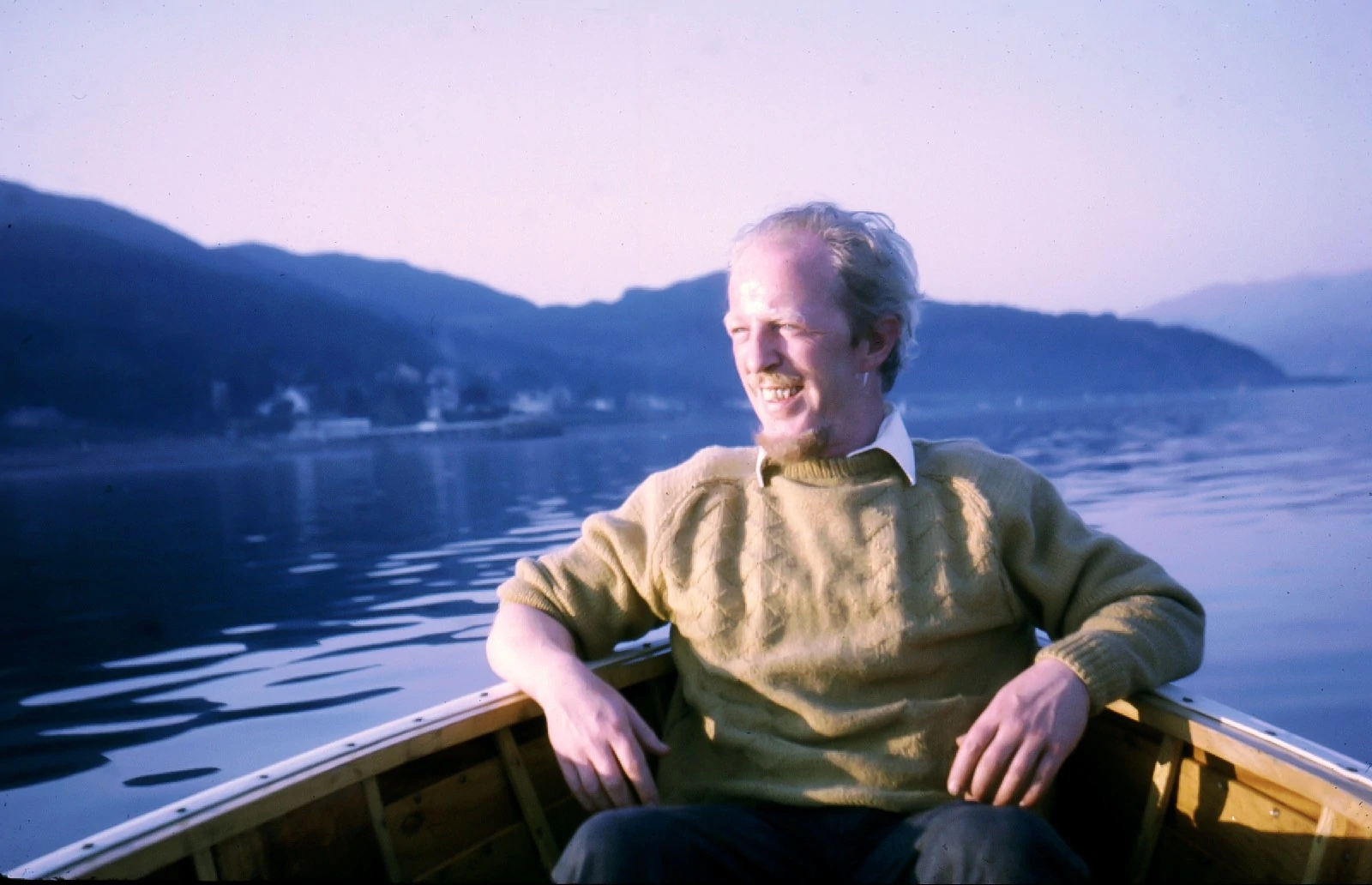
As a devotee of golf his 20 handicap was a flattering nonsense. As a yachtsman he had difficulty keeping clear of properly charted but submerged rocks in the Kyles of Bute. But there he'd be, risen early and out first light to swing clubs, bend on sails, or whatever else was his latest sporting enthusiasm.

A man of short stature, he married Anna, who was close to six feet tall, and much enjoyed the visual presented by the couple, whose long and happy marriage only ended with her sudden death.
Anna and Cliff had one son, the artist and musician Clifford G. Hanley, and two daughters, Jane and Jo.